Blown in attic insulation in San Angelo
Fiberglass or cellulose blown to the recommended depth over your attic floor. The most affordable way to push back against a sun baked roof.
The most affordable fix for a hot attic
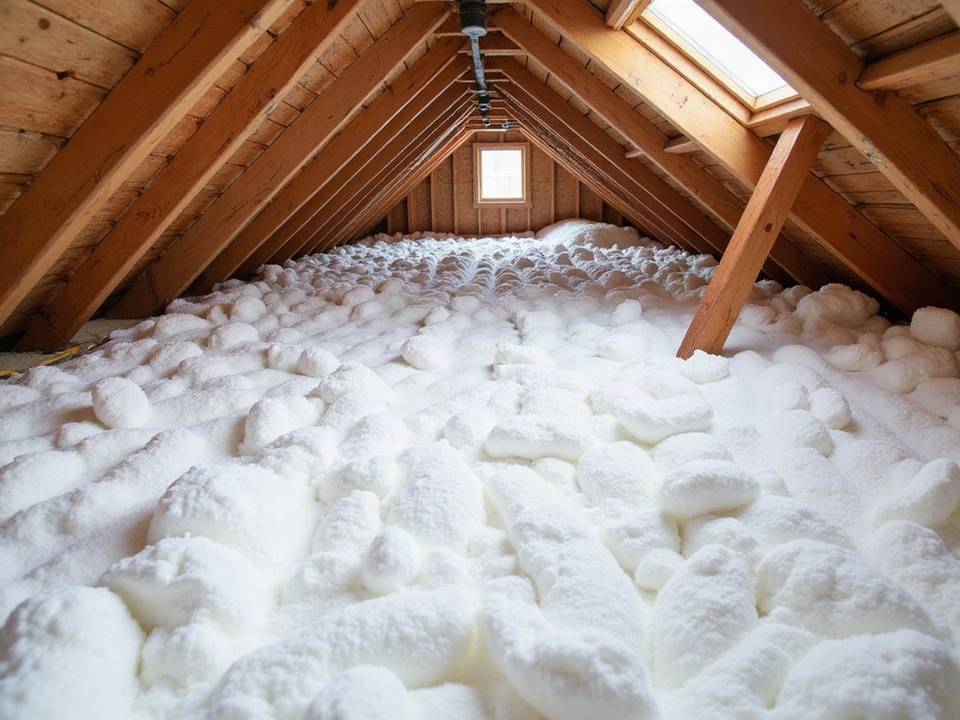
Blown in insulation is loose fiberglass or cellulose sent up a hose and spread across the attic floor. Because it is loose, it settles in around joists, wires and corners and forms one even blanket with no seams.
A lot of homes in San Angelo and Grape Creek still have the insulation they were built with. Over the years it packs down, and anyone who has crawled through for wiring, cable or AC work leaves bare trails behind. Bringing that attic back to full depth is usually the cheapest upgrade that you can actually feel. It slows the heat coming off a sun baked roof in summer and holds the warmth in when a winter freeze rolls through.
Tom Green County is in climate zone 3. For this zone, ENERGY STAR recommends R-49 in an attic with no insulation, or adding R-38 if you already have 3 to 4 inches.
- Depth rulers set out so you can check the finished depth
- Fiberglass or cellulose, with the tradeoffs explained
- Air sealing of the largest attic leaks before we blow
- Eave baffles to keep soffit vents clear
- Radiant barrier in the same visit if your roof sits in full sun
Fiberglass or cellulose?
| Blown fiberglass | Cellulose | |
|---|---|---|
| Made from | Spun glass fibers | Recycled paper treated for fire |
| Insulation per inch | About R-2.2 to R-2.7 | About R-3.2 to R-3.8 |
| Depth for the same R-value | More inches | Fewer inches |
| Air movement | Air passes through more easily | Denser, slows air a little more |
| After a roof leak | Does not hold water | Soaks it up and dries slowly |
Either works in a dry climate like ours. Cellulose is denser, so it slows a bit more of the dusty air drifting through the attic. Fiberglass is lighter and does not hold water if the roof ever leaks. We will help you pick the one that suits your attic.
Is your attic running low?
Joists are showing
If you can see the tops of the ceiling joists, the layer is too thin.
Warm ceilings by late afternoon
A ceiling that feels warm to the touch around 5 pm is letting attic heat through.
AC that runs and runs
If the system barely shuts off on summer afternoons, the attic is often part of the reason.
Packed down or uneven
Old insulation flattens over time and gets pushed aside by anyone working up there.
Most attics take one day
Look it over
We measure the current depth and check for leak stains, rodents and gaps.
Seal and baffle
Big air leaks get sealed and baffles go in at the eaves.
Blow it in
Insulation goes down evenly to the depth on your estimate.
Verify and clean
Depth rulers confirm the result, and we clean up around the hatch.
What blown in insulation costs
For most existing homes, blown in is the least expensive way to add attic R-value. Attic size, how much depth you need, fiberglass or cellulose, and whether damaged insulation has to be removed first all shape the price.
Every attic gets a written price after a free inspection. See what affects insulation cost.
Blown in insulation questions
Can new insulation go over the old?
- Yes, as long as the old layer is clean and dry.
- Insulation with droppings, nests or leak damage should come out first.
How deep is R-38?
- Roughly 12 to 16 inches, depending on the product.
- We follow the manufacturer’s chart and mark the depth.
Should I add a radiant barrier too?
- In San Angelo it is often worth considering, especially with ducts in the attic.
- Doing both in one trip usually costs less than two visits.
Will it make a mess in the house?
- No. The hose runs from the truck to the attic, and we cover the floor under the hatch.
How long does it take?
- A few hours for most homes.
Blown in attic insulation near you
Get a free attic insulation estimate
Prefer to talk? Call us and we will set up your free inspection.