Spray foam vs fiberglass: which is right for your house?
A plain comparison for homes and buildings under intense West Texas sun, with hot days, cool nights and plenty of dust. Each one wins certain jobs.
The quick answer
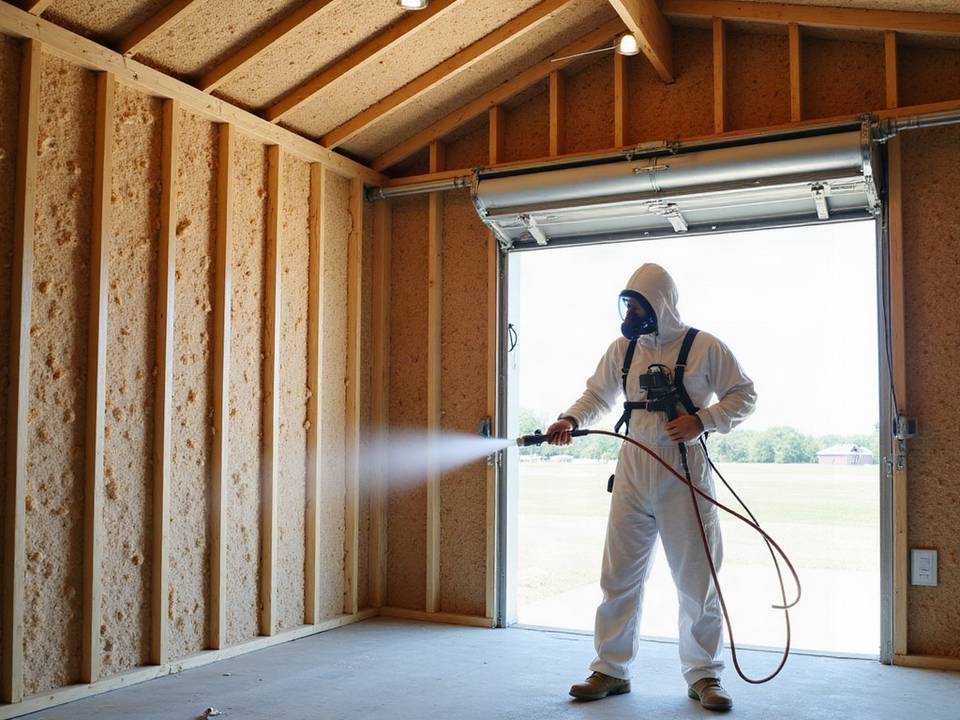
If your attic only needs more depth, the ducts are sealed and the house is not especially leaky, blown in fiberglass usually buys the most comfort for the money. If dust keeps finding its way inside, the ducts run through a hot attic, the house is older and loose, or you are insulating a pole barn or ranch shop, spray foam often justifies its higher price.
| Blown in fiberglass | Spray foam | |
|---|---|---|
| What it does | Slows heat through the attic floor | Slows heat and stops air leaks |
| Where it goes | On the attic floor | Under the roof deck, in walls, on metal panels |
| Dust and air leaks | Air still moves through gaps unless sealed separately | Blocked at the surfaces it covers |
| Attic ducts | Stay in an attic that gets very hot in summer | Brought inside the sealed shell |
| Metal buildings | Not a good fit | Closed cell stops heat and condensation |
| Pairs with radiant barrier | Yes, a strong combination in full sun | Not needed on a foamed roof deck |
| Relative price | Lower | Higher |
Six reasons San Angelo owners pick spray foam
Followed by the times they should not.
A cooler attic
Foam on the roof deck keeps the attic near indoor temperature, even with the afternoon sun hammering the shingles.
Ducts out of the heat
Ductwork inside the sealed shell delivers more of the cool air you pay for.
Less dust indoors
A tight shell keeps out more of the fine dirt that rides in on dry, windy days.
Steady through the swing
Rooms hold their temperature better as hot afternoons turn into cool nights.
Dry metal roofs
Closed cell foam keeps barn and shop roofs from sweating when the steel cools after dark.
No settling
Foam holds its shape for the life of the building instead of packing down.
When fiberglass is the better buy
- Depth is the only problem. A top up costs much less and fixes the main issue.
- The ducts are tight and the attic is sound, or the air handler sits inside the house.
- Your budget is limited. A good blown in job, maybe with a radiant barrier, is a real step up on its own.
- A new roof is coming. Some owners wait and time roof deck foam with the reroof.
What it means for homes around San Angelo
West Texas puts a specific kind of stress on a house. The sun is intense and the summer is long, so the roof is the main source of heat gain. Dry air means big drops in temperature at night, an occasional hard freeze in winter, and dust that finds every crack. Insulation here has to slow that roof heat and, ideally, keep the dust out. Blown in fiberglass, especially with a radiant barrier above it, handles the heat well. Spray foam handles heat and air leaks together.
Older homes in established San Angelo neighborhoods often lose more comfort through leaks than through thin insulation, so they tend to benefit most from sealing. Newer single story homes in Grape Creek or on the edges of town with fair attic depth are often well served by a blown in top up and a radiant barrier. Pole barns, ranch shops and barndominiums out toward Wall, Christoval, Miles and Mertzon almost always call for closed cell foam.
Learn more
See what affects insulation cost. For the sun side of the story, read radiant barriers and the West Texas sun, and for attic depth, read how much attic insulation a San Angelo home needs.
Get a recommendation for your house
Prefer to talk? Call us and we will set up your free inspection.