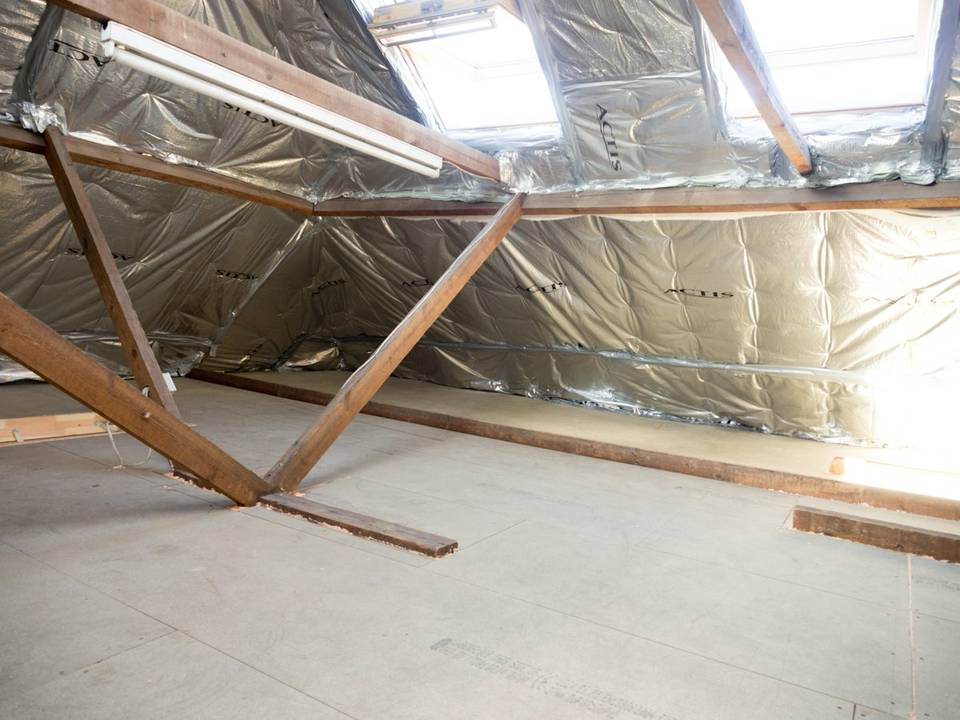
Radiant barriers get oversold in some places and dismissed in others. The honest answer depends on where you live and how your home is built. In San Angelo, with long sunny summers and ductwork in most attics, a radiant barrier is one of the upgrades that genuinely tends to make sense. It is not magic, though, and it does not replace regular insulation.
Here is how a radiant barrier works, when it helps, and when your money is better spent elsewhere.
How a radiant barrier works
Heat moves three ways: conduction through solid materials, convection through moving air, and radiation from a hot surface to a cooler one. Regular insulation mostly slows conduction. A radiant barrier targets radiation.
On a sunny afternoon your roof deck gets very hot and radiates that heat downward into the attic. A radiant barrier is a thin, highly reflective foil layer, usually stapled to the underside of the rafters or laid as foil faced decking. It reflects much of that radiant heat back toward the roof instead of letting it reach your insulation, your ducts and your ceiling.
For it to work, the shiny side needs an air space next to it. Foil pressed tight between two solid materials loses most of its benefit.
Why West Texas is a good fit
The U.S. Department of Energy states plainly that radiant barriers are more effective in hot climates than in cool climates, especially when cooling ducts run through the attic. That describes a typical San Angelo house pretty well.
- Strong sun. Clear skies mean the roof takes direct sun for most of the day through a long cooling season.
- Ducts in the attic. Most homes here run supply ducts through the attic, so cooled air travels through the hottest space in the house. Lowering attic temperature helps that air arrive cooler.
- Evening heat. A hot attic keeps warming the ceiling after sunset. Cutting the heat load earlier in the day helps the house cool off faster at night.
When a radiant barrier helps less
Honesty matters here, because a radiant barrier is not right for every house.
- If the attic is badly underinsulated, fix that first. Bringing your attic floor up to the recommended level usually does more than foil alone. Our guide on how much attic insulation a San Angelo home needs covers the targets.
- If the attic is already sealed with spray foam at the roof deck, the attic is inside the conditioned space and a radiant barrier adds little.
- If there are no ducts or equipment in the attic and the insulation is already deep, the added comfort is smaller.
- If foil would be laid flat on top of attic floor insulation, dust settles on it. The Department of Energy notes that dust buildup reduces its reflective ability. In a dusty, windy region, that is a real concern. Attaching it to the rafters with the shiny side facing down keeps it cleaner.
Radiant barrier versus more insulation
These two upgrades work on different kinds of heat, so they are partners, not rivals. Think of insulation as a thick coat and a radiant barrier as a shade umbrella. Under the West Texas sun, the best results usually come from having both: enough blown in insulation on the attic floor and a radiant barrier under the roof deck.
If you are planning both, the order matters little as long as the air sealing at the attic floor is done before new insulation goes down. A good crew can usually handle both in one visit.
Metal buildings and shops
Reflective products also show up in metal shops, pole barns and barndominiums, where the roof is bare steel. They can cut summer heat noticeably, but on their own they do not stop condensation dripping from the roof on cool mornings. For those buildings, read our posts on pole barn insulation and barndominium insulation, or see our metal building insulation service.
Signs a radiant barrier may be worth a look
- Upstairs or west facing rooms stay warm well into the evening.
- The AC runs nearly nonstop on summer afternoons.
- Your attic already has decent insulation, but the house still feels hot under the roof.
- Your ducts and air handler are in the attic.
- You have a dark roof with full afternoon sun exposure.
What affects the cost
We do not quote prices online. The main factors are the size and pitch of the roof, how easy the attic is to move around in, whether the barrier is stapled to rafters or installed with new decking during a reroof, and whether it is combined with other work like air sealing or adding insulation. A reroof is the easiest time to add one. Our insulation cost guide explains more.
The bottom line
- A radiant barrier blocks radiant heat from the roof. Insulation slows conducted heat. They do different jobs.
- Hot, sunny climates with attic ductwork are where radiant barriers pay off best, and that describes much of San Angelo.
- Get your attic insulation to the recommended level first if it is thin.
- Install the foil where dust will not cover it.
We install radiant barriers and attic insulation in San Angelo, Wall, Christoval, Grape Creek, Miles and Mertzon. Not sure if it fits your house? Request a free attic inspection and we will give you a straight answer about whether a radiant barrier, more insulation, or both will make the biggest difference.