Radiant barrier installation in San Angelo
Reflective foil under the rafters that turns back the heat a West Texas roof soaks up all afternoon. Sunny, hot climates are where it does its best work.
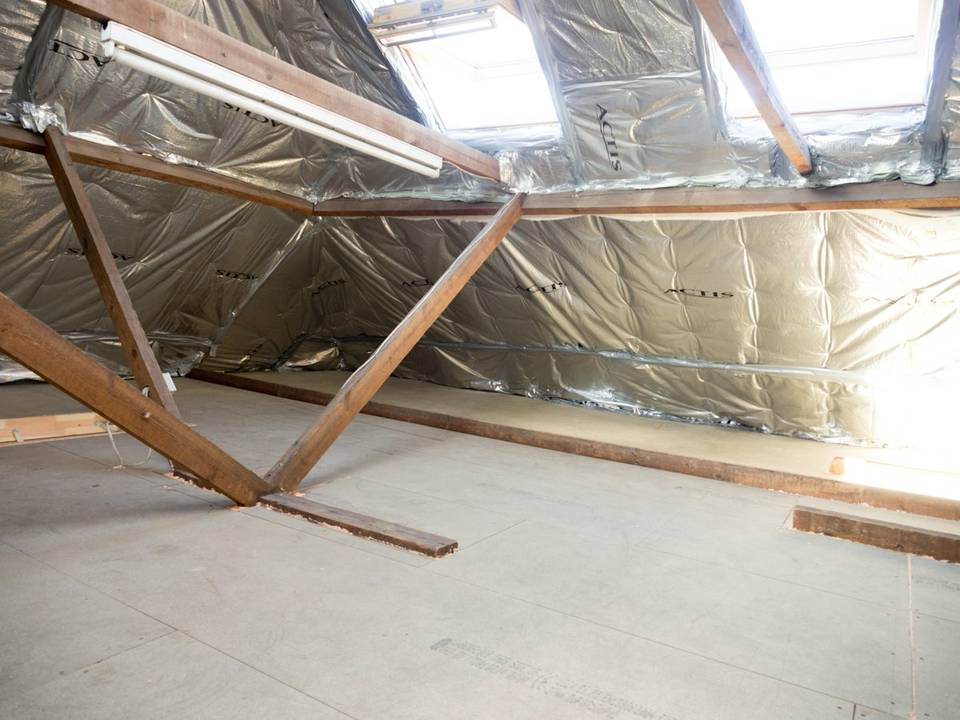
Stop roof heat before it reaches the attic floor
When the sun beats on your roof all afternoon, the decking gets hot and radiates that heat down onto the insulation and any ducts below it. Insulation slows heat once it arrives. A radiant barrier works a step earlier. It is a foil layer fastened under the rafters that reflects much of that radiant heat back toward the roof before it gets to the attic floor.
That makes San Angelo close to ideal for it. Radiant barriers do their best work in hot, sunny climates, and here the skies are clear most of the summer, the sun is strong, and many roofs have little or no shade from trees. If your ducts and air handler are in the attic, the payoff is even bigger.
To be fair about it, a radiant barrier is a summer tool. It does little to keep heat in during a winter freeze, and it does not seal air leaks or keep dust out. If your attic is thin or your house is leaky, insulation and air sealing come first. Plenty of homeowners do both in one trip.
- Foil radiant barrier fastened to the underside of the rafters
- Air space toward the roof, which the foil needs to reflect heat
- Soffit and ridge vents kept open so the attic can breathe
- Blown in top up during the same visit if your attic needs it
- Free inspection and a written price before we start
When a radiant barrier pays off, and when it does not
Roof in full sun
Homes on open lots, newer subdivisions and country places with little shade see the biggest difference.
Ducts in the attic
Ductwork under a hot roof gains the most from a cooler attic.
Dark shingles, west exposure
Roofs that soak up the late afternoon sun are prime candidates.
Not a winter fix
If cold rooms are the main complaint, attic depth and air sealing will help far more.
Skip it with roof deck foam
If the roof deck is getting spray foam, a radiant barrier adds very little there.
Thin attic first
A barrier over a bare attic is backwards. Get the depth right, then add foil.
For more detail, read radiant barriers and the West Texas sun.
Most homes take a day
Inspect
We look at sun exposure, ventilation, access and your current insulation depth.
Written estimate
Barrier and any top up, priced together.
Install
Foil goes up on the rafters with vent paths left open.
Top up and clean
Insulation is added if needed, then we tidy the attic.
What a radiant barrier costs
Attic size and how easily we can reach the rafters drive most of the price. Low pitch roofs and crowded attics take longer. Doing it with a blown in top up usually costs less than two separate trips.
See what affects insulation cost, or ask for a free written estimate.
Radiant barrier questions
Does a radiant barrier really work in San Angelo?
- Yes. Hot, sunny climates are where it helps most.
- It works best with good attic depth underneath.
Does it help in winter?
- Only a little. It is mainly a summer upgrade.
- For winter comfort, focus on attic depth and air sealing.
Does it replace insulation?
- No. It reflects radiant heat, while insulation slows heat moving through it.
- Most attics need both.
Can the foil lie on top of my insulation?
- We do not recommend it. Dust settles on flat foil and it stops reflecting.
- That matters here, where attics collect plenty of dust. It belongs on the rafters.
What happens if my roof is replaced?
- Foil on the rafters usually stays put when shingles are replaced.
- If decking comes off, we can check it afterward.
Radiant barrier installation near you
Get a free radiant barrier estimate
Prefer to talk? Call us and we will set up your free inspection.