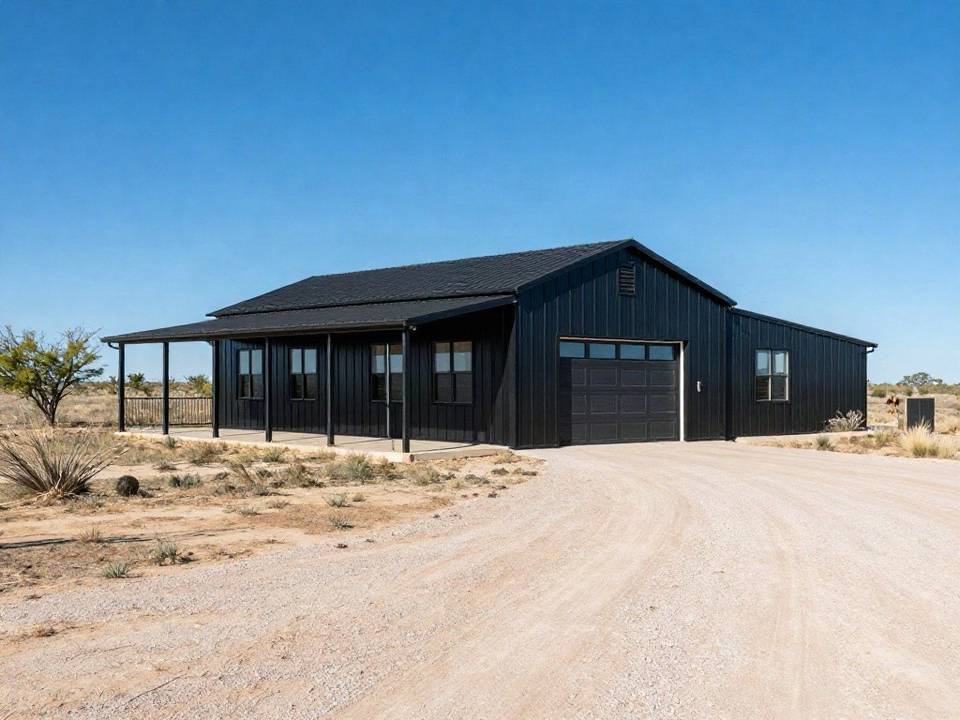
Barndominiums have caught on across the Concho Valley. A steel frame and metal skin go up fast, hold up to wind and hail, and leave plenty of room for a shop beside the living quarters. But a metal building does not behave like a wood frame house. The way you insulate it decides whether it feels like a comfortable home or a sweaty, noisy shed with furniture in it.
This guide lays out the main choices in plain language, so you can talk with your builder and insulation contractor with a clear picture of what matters.
Why barndominiums need a different approach
Steel moves heat quickly. Under the afternoon sun in San Angelo, roof and wall panels get very hot, and that heat reaches the inside fast if nothing stops it. On a cool, clear night the same panels lose heat just as quickly and can drop below the temperature where moisture in the indoor air condenses on them.
In a living space, people cook, shower, breathe and run dishwashers, which puts a lot of water vapor into the air. If that warm, moist air reaches cold metal, you get condensation inside the walls and roof. That can lead to rust, wet insulation, stains and mold. Good insulation in a barndominium has two jobs: slow the heat and keep indoor air away from the steel.
The main insulation options
Closed cell spray foam. This is the most common choice for barndominium living areas, and for good reason. It bonds directly to the metal, fills gaps at panel laps and fasteners, adds air sealing and works as a vapor retarder. Because it leaves no gap for moist air to reach the steel, it handles the condensation problem head on. Learn more on our spray foam insulation page.
Open cell spray foam. It costs less per inch of thickness and is good for sound control, but it lets more moisture through. On metal, it is usually paired with a closed cell layer against the steel or used only in interior walls.
Faced blanket insulation. Installed during construction between the purlins or girts and the panels, blanket insulation with a sealed vapor retarding facing is a common choice for the shop side. Performance depends on continuous facing with taped seams.
Framed walls with batts. Many builders frame interior stud walls inside the steel shell for the living area. Those cavities can take batt insulation, but there should still be a continuous air and vapor control layer between the living space and the metal, often a layer of closed cell foam on the steel first.
Radiant barrier. Reflective layers help with summer heat under strong sun. On their own they do not solve condensation in a living space. Our post on radiant barriers under the West Texas sun explains where they fit.
Living space and shop space are different
Most barndominiums combine a home and a shop or garage under one roof. Those two areas often need different treatment.
- Living area: full insulation, tight air sealing, careful vapor control, and a plan for ventilation and HVAC sizing.
- Shop or garage: enough insulation to stop dripping and take the edge off summer heat, with attention to large doors and vents.
- The wall between them: should be insulated and sealed like an exterior wall, especially if the shop is not heated or cooled.
Planning both together from the start keeps you from paying to redo work later.
Planning tips for Concho Valley builds
- Talk insulation before the shell goes up. Some methods, like faced blankets, are installed as panels go on. Others, like spray foam, go in after the shell is dried in.
- Plan the roof first. The roof takes the most sun. Give it the most attention.
- Seal the eaves, ridge and base. Open gaps at the top and bottom of metal walls let wind and dust in. Closure strips and foam at these spots matter.
- Size the HVAC after insulation is chosen. A well insulated barndominium may need a smaller system than you expect. Ask your HVAC contractor to size it for the actual building.
- Plan for fresh air. A tightly sealed home needs proper exhaust fans in kitchens and baths and may need a planned fresh air supply.
- Think about noise. Hail and heavy rain on a bare metal roof are loud. Spray foam quiets that considerably.
Converting an existing building
Some owners turn an existing shop or pole barn into living space. That can work well, but it usually means removing old, damaged insulation, cleaning the panels, and applying a new system designed for a home rather than a shop. If you are starting from a barn, our post on pole barn insulation in West Texas covers the condensation issues in more depth, and our insulation removal service handles the cleanout.
What drives the cost
We do not list prices online, because every build is different. The biggest factors are total roof and wall area, the materials and thickness you choose, how the living space and shop space are divided, whether you are building new or converting, framing details, and site access. Our insulation cost guide goes into each of these, and our metal building insulation page explains how we approach steel structures.
Key takeaways
- Steel moves heat fast and invites condensation on cool nights.
- In living areas, keep indoor air away from the metal with a continuous seal.
- Closed cell spray foam is the most common way to do that.
- Treat the shop and the living space as separate zones.
- Plan insulation, ventilation and HVAC together, before the shell goes up.
We insulate barndominiums, shop houses and metal buildings in San Angelo and the surrounding country near Wall, Christoval, Grape Creek, Miles and Mertzon. Planning a build or converting a shop? Request a free estimate and we will walk through your plans and recommend an insulation approach that keeps the living space dry, quiet and comfortable.